
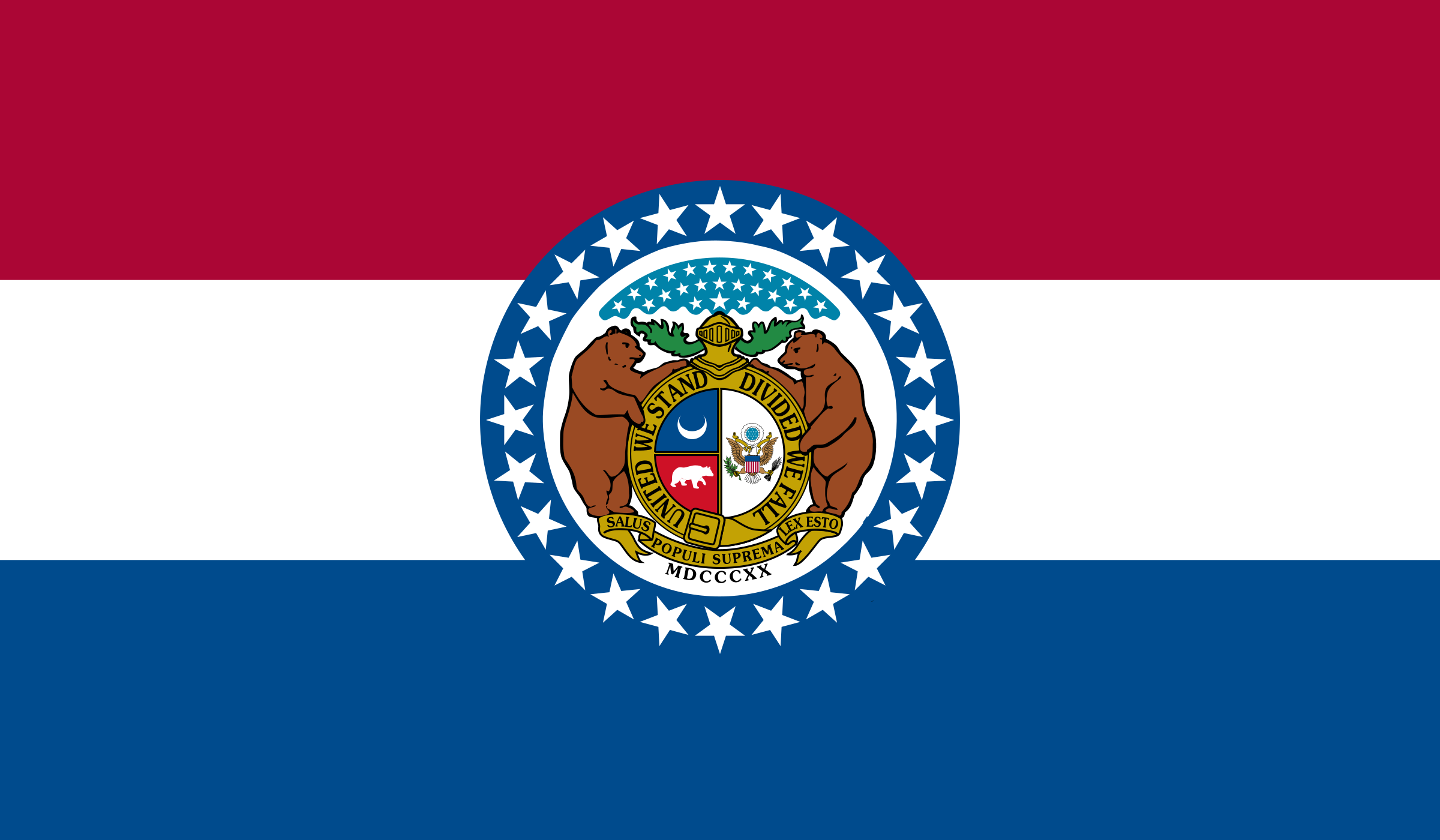
 Missouri vs
 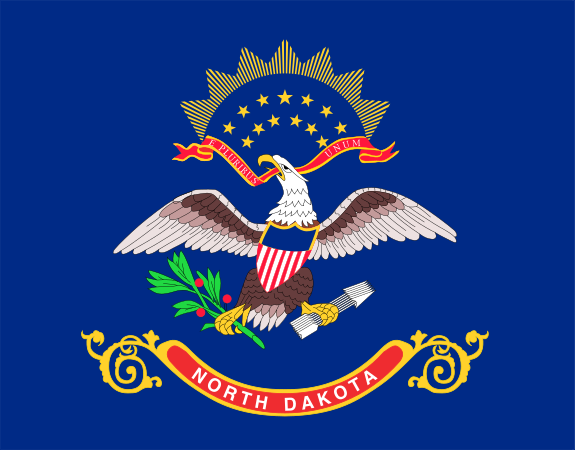 North Dakota
Take-home pay after federal tax, state income tax, and FICA — calculated with the same engine as our paycheck calculator.
By Sammy S. · Founder · AuthorUpdated for 2026
Winner at $100k
North Dakota
Extra take-home / year
$3,078
Per month
$257
Over 10 years
$30,780
Moving from Missouri → North Dakota at $100,000
Metric vs metric
Lower tax and cost figures generally favor the highlighted cell. Rate structure notes sit under each state's calculator link.
| Metric | Missouri | North Dakota |
|---|---|---|
| Income tax | 4.70% · Progressive (top 4.70%) | 2.50% · Progressive (top 2.50%) |
| Combined sales tax | ~8.44% | ~7.09% |
| Effective property tax | ~0.89% | ~0.92% |
| Cost of living index | 88.6 | 90.7 |
| Median household income | $67,800 | $73,800 |
| Unemployment rate | 3.2% | 2% |
Dig into each state's paycheck
Missouri rate structure
Progressive brackets with a top marginal rate of about 4.70%.
North Dakota rate structure
Progressive brackets with a top marginal rate of about 2.50%.
Overview
Missouri (Progressive (top 4.70%)) vs North Dakota (Progressive (top 2.50%)). At $100,000 gross (single), North Dakota typically leaves you with about $3,078 more take-home than Missouri after federal, state, and FICA. Sales tax ~8.44% vs ~7.09%; property tax ~0.89% vs ~0.92%. Median household income (ACS 2024): $67,800 vs $73,800.
Take-home by income
Net pay after federal income tax, state income tax, and FICA — single filer, standard deduction, no dependents (2026). Advantage is take-home in North Dakota minus Missouri.
| Gross | Missouri take-home | North Dakota take-home | Advantage |
|---|---|---|---|
| $50,000 | $40,907 | $41,105 | +$198 |
| $75,000 | $58,970 | $61,360 | +$2,390 |
| $100,000Headline | $75,382 | $78,460 | +$3,078 |
| $150,000 | $107,643 | $112,096 | +$4,453 |
| $200,000 | $140,429 | $146,257 | +$5,828 |
| $500,000 | $317,879 | $330,634 | +$12,755 |
Assumptions: single filer, standard deduction, no dependents, tax year 2026. At $100k: FICA ≈ $7,650 in both states; effective total tax rate ≈ 24.6% in Missouri vs 21.5% in North Dakota. Local city taxes are not included unless noted.
$100k tax breakdown: Missouri vs North Dakota
Where a $100,000 paycheck goes after federal income tax, state income tax, and FICA (2026, single filer).
| Line item | Missouri | North Dakota |
|---|---|---|
| Gross pay | $100,000 | $100,000 |
| Federal income tax (est.) | $13,170 | $13,170 |
| State income tax | $3,798 | $720 |
| FICA (SS + Medicare) | $7,650 | $7,650 |
| Take-home pay | $75,382 | $78,460 |
| Effective total tax rate | 24.6% | 21.5% |
| Monthly take-home | $6,282 | $6,538 |
Federal estimates can differ slightly between states when state interactions affect taxable income. Combined sales tax ~8.44% (Missouri) vs ~7.09% (North Dakota); effective property tax ~0.89% vs ~0.92%.
Pros & cons: Missouri vs North Dakota
Tax structure, living costs, and lifestyle trade-offs beyond the paycheck number.
Missouri
Pros
- Modeled with our 2026 federal + state + FICA paycheck engine
- Use the Missouri paycheck calculator for your filing status and deductions
- Pair with sales/property tax when housing or spending is a large share of budget
Cons
- −State income tax (Progressive (top 4.70%)) reduces take-home vs a $0-income-tax peer
- −Roughly $3,078/year less take-home at $100k vs North Dakota
- −Higher combined sales tax (~8.44% vs ~7.09% in North Dakota)
- −Lower median household income ($67,800 ACS 2024 vs $73,800)
- −Higher unemployment rate (3.2% vs 2%)
North Dakota
Pros
- Lower top/marginal state rate (Progressive (top 2.50%)) than Missouri (Progressive (top 4.70%))
- About $3,078/year more take-home at $100k gross (single) vs Missouri
- Lower combined sales tax (~7.09% vs ~8.44% in Missouri)
- Higher median household income ($73,800 ACS 2024 vs $67,800)
- Lower unemployment rate (2% vs 3.2%)
Cons
- −Local city/county taxes and credits are not fully modeled in the headline ladder
- −Housing, insurance, and wages can outweigh pure income-tax differences
- −Tax law changes — confirm rates with the state department of revenue
Who wins when
Quick read on when each state is the better fit — beyond the headline tax number.
- North Dakota wins on take-home pay at every salary band in our ladder (single filer, standard deduction).
- Missouri: Modeled with our 2026 federal + state + FICA paycheck engine
- Missouri: Use the Missouri paycheck calculator for your filing status and deductions
- North Dakota: Lower top/marginal state rate (Progressive (top 2.50%)) than Missouri (Progressive (top 4.70%))
- North Dakota: About $3,078/year more take-home at $100k gross (single) vs Missouri
How we calculate Missouri vs North Dakota
Tax engine. Federal income tax uses 2026 IRS brackets and the standard deduction for a single filer. FICA includes Social Security and Medicare employee shares. State income tax applies Missouri's and North Dakota's rules as modeled in our US calculator (Progressive (top 4.70%) vs Progressive (top 2.50%)).
What's included. Wage income only — no capital gains, self-employment tax, itemized deductions, credits, or local city wage taxes (e.g. NYC) unless noted. Sales tax (~8.44% vs ~7.09%) and property tax (~0.89% vs ~0.92%) are context metrics, not subtracted from the take-home ladder.
Cost of living. COL indexes (88.6 vs 90.7, 100 = US average) and median household income ($67,800 vs $73,800) help interpret whether a paycheck win buys more in real life. For city-level equivalent salary, use the Missouri → North Dakota relocation calculator.
Frequently asked questions
Common questions about Missouri vs North Dakota taxes, take-home pay, and relocation.
Moving Missouri → North Dakota?
Model cost-of-living equivalent salary, or open each state's paycheck calculator with your filing status and deductions.
Related tools
Estimates only for tax year 2026. Not tax advice — verify with your state tax agency or a CPA before relocating. Figures assume a single filer with the standard deduction and no dependents.