Tax Calculator

Paycheck Tax Calculator

All states
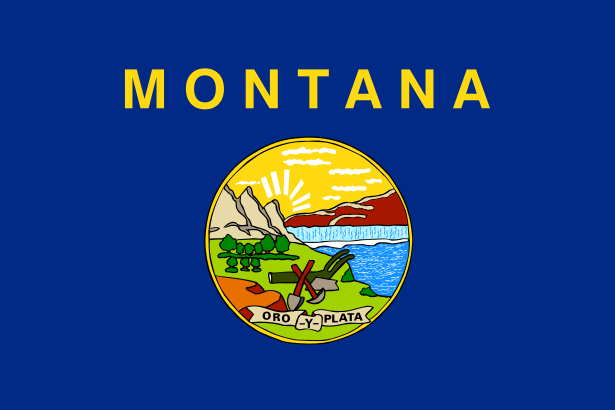
Montana flag2026Rank #36

Montana Self-Employment Tax

$30,135 total at $100k · $7,534 quarterly · 5.65% headline · Progressive state income tax.

By Sammy S. · Founder · AuthorUpdated for 2026

Montana self-employment tax snapshot

Montana taxes self-employment net profit through progressive ordinary income brackets (top rate near 5.65%). State tax is computed on AGI after the deductible half of base self-employment tax, matching the 1099 tax calculator methodology. Quarterly estimates assume equal installments of the modeled annual federal SE + income + state tax with no prior-year withholding or safe-harbor override.

Total-burden rank

#36

State tax type

Progressive state income tax

Headline state rate

5.65%

Marginal at $100k

5.7%

$100k total tax

$30,135

$100k quarterly

$7,534

Who should care about Montana self-employment tax

Freelancers & 1099 contractors

Montana sole proprietors and independent contractors typically file Schedule C and Schedule SE, then pay federal income tax plus Montana income tax on net profit.

Gig and platform workers

Drivers, delivery workers, and creators who receive 1099-NEC or 1099-K forms still owe SE tax once net earnings reach $400—even when Montana taxes that profit as ordinary income.

Side-hustlers with a W-2 job

W-2 withholding can cover part of federal income tax, but Social Security wage-base coordination and Montana estimates still matter when freelance profit grows.

Compare Montana with another state

Compare any two states

Total SE + income tax, state layer, and quarterly estimates at $100k net profit.

Montana self-employment tax examples

Single-filer scenarios with $0 expenses and no W-2 wages. Figures show Schedule SE tax, federal income tax, state tax, total, and equal quarterly installments for 2026.

$50,000 net profit

SE tax
$7,065
Federal
$3,396
State
$1,843
Total
$12,304
Quarterly
$3,076
Take-home
$37,696

$100,000 net profit

SE tax
$14,130
Federal
$11,616
State
$4,390
Total
$30,135
Quarterly
$7,534
Take-home
$69,865

$150,000 net profit

SE tax
$21,194
Federal
$22,191
State
$7,015
Total
$50,400
Quarterly
$12,600
Take-home
$99,600

$200,000 net profit

SE tax
$28,234
Federal
$33,346
State
$9,642
Total
$71,222
Quarterly
$17,805
Take-home
$128,778

Tax stack

How Montana freelancers' tax layers stack

At $100,000 net profit, the modeled combined bill is $30,135 with an effective rate near 30.14%. Federal self-employment tax does not change by state; Montana mainly changes the income-tax layer.

Federal self-employment tax

About $14,130 at $100,000 net profit in the single-filer model—Social Security (12.4%, wage-base capped) plus Medicare (2.9%) on 92.35% of net earnings, with Additional Medicare Tax when thresholds are met.

Federal income tax

About $11,616 after deducting half of base SE tax from AGI and applying the standard deduction for a single filer. Brackets do not change by state.

Montana income tax

About $4,390 in the $100k scenario (progressive state income tax, headline 5.65%)

Quarterly estimated tax

Equal installments of the modeled annual bill are about $7,534 per quarter. Safe harbor, prior-year tax, and W-2 withholding can change what you must remit.

Worked Montana example: $100,000 net profit

Single filer, no W-2 wages, $0 expenses. This mirrors the ranking scenario used across all 50 states and DC.

Calculation flow

  1. 1.Net profit: $100,000 Schedule C profit (expenses already netted to zero for the comparison).
  2. 2.SE tax: $14,130 on 92.35% of profit at 15.3% (wage-base and Additional Medicare rules applied).
  3. 3.Federal income tax: $11,616 after the deductible half of base SE tax.
  4. 4.Montana tax: $4,390 (progressive state income tax).

Modeled result

Self-employment tax
$14,130
Federal income tax
$11,616
Montana tax
$4,390
Combined modeled tax
$30,135
Quarterly installment
$7,534
Take-home
$69,865

Educational comparison only—QBI, local taxes, credits, and actual expenses can change the return.

Calculation guide

How self-employment tax works in Montana

  1. 1

    Compute net profit

    Start with gross self-employment income (including 1099-NEC/1099-K) and subtract ordinary and necessary business expenses to get Schedule C net profit.

  2. 2

    Calculate self-employment tax

    Multiply net profit by 92.35%, then apply 12.4% Social Security (capped at $184,500 for 2026) and 2.9% Medicare, plus 0.9% Additional Medicare Tax when combined earnings exceed the filing-status threshold.

  3. 3

    Deduct half of base SE tax

    Subtract 50% of Social Security + Medicare SE tax (not Additional Medicare Tax) when computing AGI for income tax.

  4. 4

    Apply federal and state income tax

    Estimate federal income tax on AGI after the standard or itemized deduction, then apply your state's ordinary income-tax rules to the same profit.

  5. 5

    Plan quarterly payments

    Divide the expected annual SE + income tax (minus withholding) into four estimated payments, or use the IRS safe-harbor rule based on prior-year tax.

Montana self-employment tax planning tips

Budget SE tax first

Set aside roughly 15.3% of net profit for Schedule SE before estimating federal and Montana income tax—then refine with the 1099 calculator.

Track deductible expenses

Software, home office, mileage, contractors, and supplies reduce Schedule C net profit and therefore both SE tax and Montana taxable income.

Align federal and state estimates

Montana estimated payments often run alongside federal 1040-ES—confirm vouchers with Montana Department of Revenue — Individual income tax.

Watch Additional Medicare Tax

Once combined wages + SE earnings exceed $200,000 (single) or $250,000 (MFJ), the 0.9% Additional Medicare Tax can apply on the excess.

Revisit mid-year

If Montana profit jumps after a big client or seasonal spike, increase the next estimated installment instead of waiting until April.

Compare before relocating

Use the pair picker to contrast Montana with no-tax or lower-tax states—housing and health costs can erase a headline rate win.

Estimated tax checklist for Montana

Track net profit quarterly

Update Schedule C income and expenses each quarter so installments track reality, not last year’s guess.

Separate SE from income tax

Schedule SE is federal. Also set aside federal income tax and any Montana estimated income tax.

Check federal safe harbor

Compare required payments to 100% (or 110%) of prior-year tax to reduce underpayment-penalty risk.

Confirm state due dates

Many states mirror federal dates, but Montana may use different thresholds or vouchers—check Montana Department of Revenue — Individual income tax.

Adjust for W-2 withholding

Side wages can cover part of the annual bill. Increase withholding when freelancing income jumps.

Save records for filing

Keep 1099s, expense receipts, quarterly payment confirmations, and prior-year returns for Schedule SE and state returns.

Self-employment tax terms used on this page

Net profit
Schedule C gross income minus ordinary and necessary business expenses—the starting point for SE tax.
92.35% base
IRS Schedule SE multiplies net profit by 92.35% before applying Social Security and Medicare rates.
SE tax
Combined 12.4% Social Security + 2.9% Medicare (15.3%) on the SE base, plus 0.9% Additional Medicare Tax when thresholds are met.
Deductible half
50% of base SE tax (not Additional Medicare Tax) is deductible in computing AGI for income tax.
Quarterly estimate
Planning installment equal to expected annual SE + income tax ÷ 4, adjusted for withholding and safe harbor.
Headline state rate
Flat rate or top progressive bracket used as a quick comparison signal—not necessarily your effective rate.

How to read the Montana figures

Total tax

SE + federal income + state (and modeled local) for the stated net profit.

Headline rate

Flat rate or top progressive bracket used as a state comparison signal.

Quarterly

Annual modeled tax ÷ 4; not a substitute for Form 1040-ES worksheets.

Not modeled

QBI, every local tax, credits, S corp payroll, and business-expense mixes.

State rule: State tax is computed on AGI after the deductible half of base self-employment tax, matching the 1099 tax calculator methodology. Quarterly estimates assume equal installments of the modeled annual federal SE + income + state tax with no prior-year withholding or safe-harbor override.

Montana self-employment tax FAQs

Montana taxes self-employment net profit through progressive ordinary income brackets (top rate near 5.65%). State tax is computed on AGI after the deductible half of base self-employment tax, matching the 1099 tax calculator methodology. Quarterly estimates assume equal installments of the modeled annual federal SE + income + state tax with no prior-year withholding or safe-harbor override.

Federal SE tax is 15.3% on 92.35% of net earnings nationwide (Social Security portion capped at $184,500 for 2026). Montana's state income-tax layer is progressive state income tax with a headline rate of 5.65% and about 5.7% marginal at $100k AGI.

Yes. Self-employment tax (Schedule SE) funds Social Security and Medicare and is federal. Montana may also tax net profit as ordinary income (progressive state income tax). Freelancers typically owe both layers plus federal income tax.

About $12,304 total ($7,065 SE tax, $3,396 federal income tax, $1,843 state tax). Quarterly estimate ≈ $3,076; take-home ≈ $37,696.

About $30,135 total (rank #36 lowest-to-highest among 50 states + DC). Breakdown: $14,130 SE, $11,616 federal income, $4,390 state. Quarterly ≈ $7,534.

About $50,400 total (effective ~33.6%); take-home ≈ $99,600; quarterly ≈ $12,600.

About $71,222 total. Additional Medicare Tax (0.9%) may apply once SE earnings plus wages exceed the filing-status threshold ($200,000 single / $250,000 married filing jointly).

About $7,534 per quarter if you divide the modeled $30,135 annual bill into four equal federal/state installments with no W-2 withholding. Use Form 1040-ES and Montana estimated vouchers for exact due dates and safe harbor.

Yes, if net earnings from self-employment are $400 or more. Gig platforms usually issue Form 1099-NEC or 1099-K; you still compute Schedule C net profit, Schedule SE, federal income tax, and any Montana income tax.

No. The Qualified Business Income deduction can reduce federal taxable income for eligible pass-through income, but it does not reduce the Schedule SE base. Montana may or may not conform to QBI for state taxable income—confirm current conformity.

Yes. Federal SE tax applies regardless of Montana's income-tax brackets. At $100k net profit, SE tax is about $14,130 before Montana income tax of about $4,390.

Federal 1040-ES installments are generally due mid-April, mid-June, mid-September, and mid-January of the following year. Montana often uses parallel dates—confirm thresholds and vouchers with Montana Department of Revenue — Individual income tax.

Roughly $14,130 before Additional Medicare Tax and wage-base interactions—about 15.3% × 92.35% of net profit when Social Security is below the wage base. Exact Schedule SE results in our model are $14,130 for the $100k single-filer scenario.

Montana ranks #36 on this site's $100k total-tax model. State income tax is only one factor—also compare property tax, sales tax, insurance, and cost of living.

Montana Department of Revenue — Individual income tax: https://revenue.mt.gov/taxes/individual-income-tax. Federal SE rules: IRS self-employment tax guidance.

Yes. Use the pair picker on this page or open a head-to-head comparison for total tax, state tax, and quarterly payment differences at multiple profit levels.

Profile scenarios use net profit with $0 expenses and sole-proprietor-style Schedule C treatment for comparability. Enter gross receipts, expenses, filing status, and W-2 wages in the 1099 calculator for a personal estimate. S corp payroll strategies are not modeled.
1099 tax calculator→Quarterly calculator→All state rankings→