Eligible net tax ($10k)
$1,598.07
Dividend tax by province/Prince Edward Island
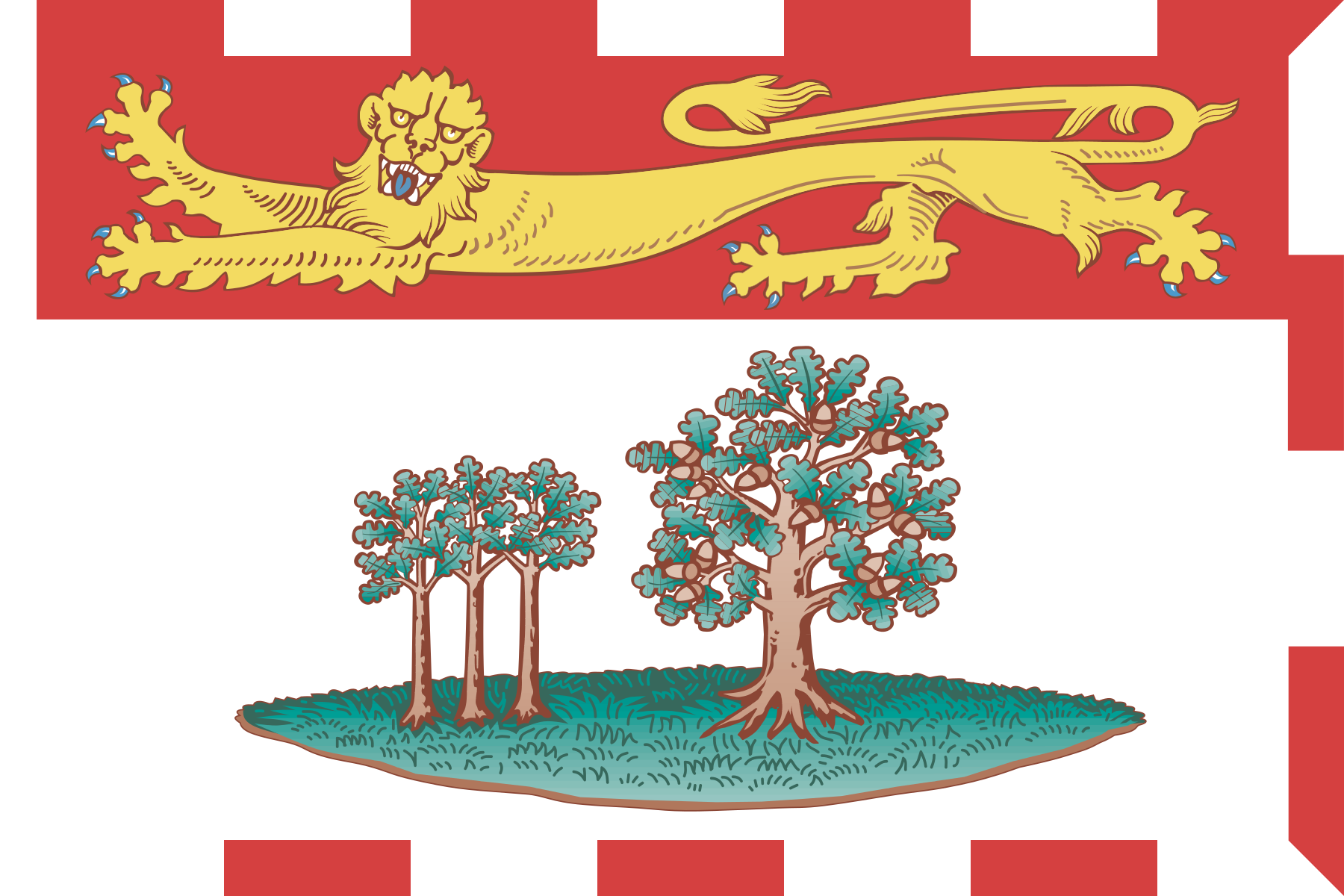
Eligible net $1,598.07 on $10,000 cash · rank #10 · provincial DTC 10.5000% eligible
Prince Edward Island taxes Canadian dividends with the same federal gross-up and dividend tax credits as other provinces, but provincial DTC rates on Form 428 differ. On $10,000 cash dividends with $80,000 other taxable income (single, 2026), modeled eligible net tax ≈ $1,598.07 (effective 15.98% on cash). Provincial DTC on grossed-up dividends: eligible 10.5000%, non-eligible 1.3000% (TaxTips.ca / provincial schedules). Net tax on the dividend is the change in income-tax liability after non-refundable DTCs — not CPP/EI.
Eligible net tax ($10k)
$1,598.07
Eligible effective rate
15.98%
Non-eligible net ($10k)
$3,078.54
National rank (eligible)
#10 lowest net
Prince Edward Island taxes Canadian dividends with the same federal gross-up and dividend tax credits as other provinces, but provincial DTC rates on Form 428 differ. On $10,000 cash dividends with $80,000 other taxable income (single, 2026), modeled eligible net tax ≈ $1,598.07 (effective 15.98% on cash). Provincial DTC on grossed-up dividends: eligible 10.5000%, non-eligible 1.3000% (TaxTips.ca / provincial schedules). Net tax on the dividend is the change in income-tax liability after non-refundable DTCs — not CPP/EI.
Federal rules are identical nationwide; Prince Edward Island differs through provincial DTC rates (10.5000% eligible / 1.3000% non-eligible of grossed-up) and provincial bracket structure.
Prince Edward Island ranks #10 — eligible net tax $1,435.20 above British Columbia and $347.60 below Newfoundland and Labrador.
Non-eligible net tax on the same cash dividend is $3,078.54 (30.79% effective).
Percent of grossed-up taxable dividend (Form 428). Federal DTC is the same nationwide.
10.5000%
1.3000%
Compare Prince Edward Island eligible vs non-eligible net tax when drawing $10,000 from Canadian stocks alongside other income.
Moving to or from Prince Edward Island? Pair compares show eligible dividend gaps with Ontario, Alberta, and Québec using the same $80,000 other income assumption.
Non-eligible dividends from small business corps face higher effective rates — check the non-eligible column on this profile before planning distributions.
variable cash cash dividends with $80,000 other taxable income (single, 2026)
| Cash dividend | Net tax | After-tax cash |
|---|---|---|
| $1,000 | $159.81 | $840.19 |
| $2,500 | $399.52 | $2,100.48 |
| $5,000 | $799.03 | $4,200.97 |
| $10,000 | $1,598.07 | $8,401.93 |
| $25,000 | $4,072.79 | $20,927.21 |
| $50,000 | $10,270.53 | $39,729.47 |
Eligible (box 24) vs other-than-eligible (box 10) changes gross-up and DTC — use the calculator with the correct type.
This profile uses $80,000 other income; your marginal rate may differ.
Dividends inside a TFSA or RRSP/RRIF follow different rules — this page is for non-registered Canadian dividends.
Open the dividend tax calculator with Prince Edward Island selected for any cash dividend and income level.
Compare any two provinces
Eligible dividend net tax on $10,000 cash with $80,000 other income (2026).
Provincial DTC and bracket stacking matter. On $10,000 cash dividends with $80,000 other taxable income (single, 2026), Alberta eligible net tax ($1,015.71) exceeds Ontario ($638.97) and British Columbia in this hub.
Non-eligible uses a 115% gross-up and lower DTCs. Every province in this hub shows materially higher net tax on non-eligible cash at the same other income.
Federal and provincial DTCs are non-refundable credits — they reduce tax to zero on each component but do not pay you back unused amounts.
CRA requires reporting taxable dividends at 138% (eligible) or 115% (other than eligible) of cash received on lines 12000/12010 before claiming DTCs.
Change amount, other income, and dividend type for Prince Edward Island.
← All provinces — dividend tax ranking
By Sammy S. · Founder · Author
 Quebec — $1,638.88
 Manitoba — $1,411.77
 Nova Scotia — $1,835.44
 Newfoundland and Labrador — $1,945.67
 Alberta — $1,015.71
 Saskatchewan — $963.27